Appeals Court Keeps Limits on San Francisco Encampment Sweeps in Place, Seeks Clarifications
The Ninth Circuit left a injunction restricting San Francisco's enforcement against street camping intact while directing the lower court to refine parts of the order.
By Mei Ling ·
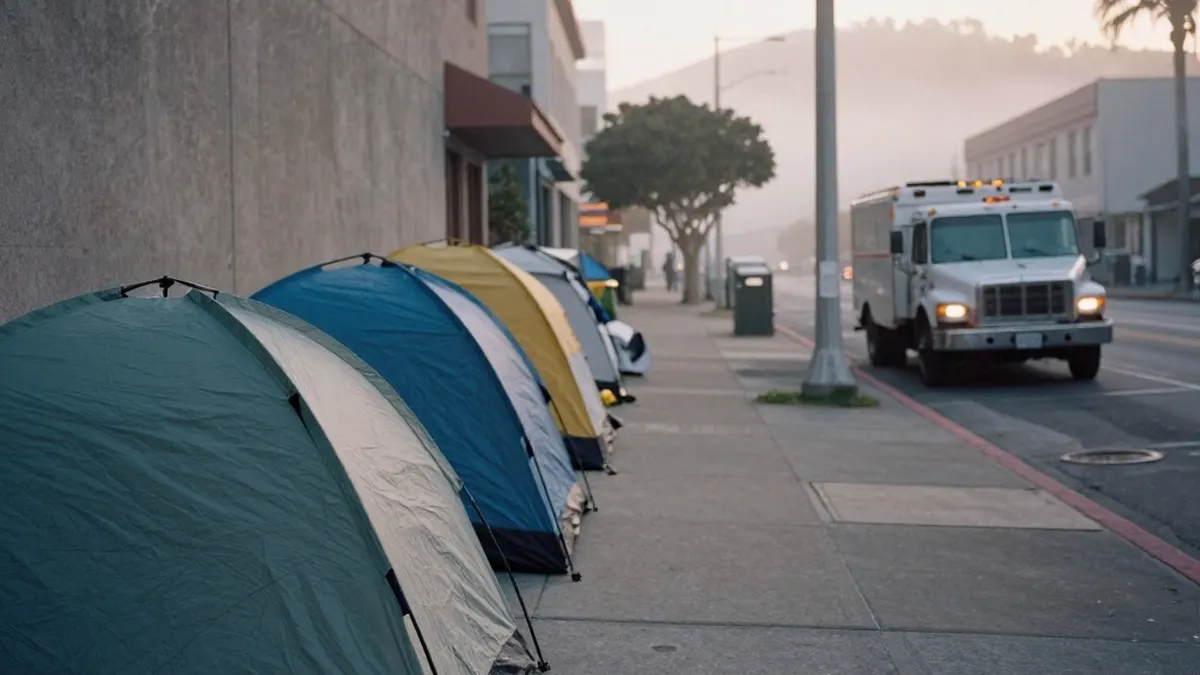
The Ninth Circuit Court of Appeals on Thursday declined to throw out an injunction that limits how San Francisco can conduct encampment sweeps, but it sent the order back to a lower court with a request to revisit several of its provisions.
The ruling is a mixed outcome for the city attorney's office, which had argued the injunction was unworkable. The order was sought by the Coalition on Homelessness as part of a continuing federal case. It restricts the city from enforcing, or threatening to enforce, particular laws against sitting, lying or lodging on the street.
A three-judge panel said the injunction should stay in effect while the underlying case proceeds in federal district court. The judges also asked that court to make clear that the order covers only people who are "involuntarily homeless," meaning it does not shield those who turn down an offer of shelter or who already have shelter.
The panel made further requests as well. It asked the district court to specify that the presence of police by itself is not a threat of enforcement. It also asked the court to consider whether it was necessary to block Police Code 169, which makes it unlawful to camp on the sidewalk. That code already requires city workers to offer shelter or housing before enforcement.
The Ninth Circuit did not take up the broader legal questions about how cities may respond to encampments. The League of California Cities, in a filing, backed the city's bid to void the injunction and argued it rested on a flawed reading of an earlier case, Martin v. Boise. The panel suggested those issues fell outside the scope of this appeal.
Jen Kwart, a spokesperson for City Attorney David Chiu, said the city welcomed the confirmation that the injunction applies only to people who are involuntarily homeless. "Nothing about the Court's order today requires San Francisco to modify its compassionate services-first approach to homelessness," Kwart said. She also said it was disappointing that, amid an intense crisis, everyone must keep waiting for a court to clarify the law.
John Do, a senior staff attorney with the American Civil Liberties Union of Northern California, which represents the Coalition on Homelessness, said the group was ready to work with the city on a way forward. He said the injunction only requires the city to follow its own policies and the law, and urged officials to take "reasonable and commonsense steps" on homelessness.
The injunction, issued in December 2022, has become a focal point for frustration over the city's handling of unsheltered homelessness. At an August 2023 rally outside the Ninth Circuit, Mayor London Breed and other elected officials said it had hampered efforts to keep streets clean and move people into shelters.
Gov. Gavin Newsom, who has made similar criticisms of the courts, said in a statement Thursday that the decision "will only create further delays and confusion" and invites continued litigation. He said it reinforces the need for the U.S. Supreme Court to provide clarity.
Newsom, San Francisco officials and local advocacy groups have urged the Supreme Court to reexamine Johnson v. Grants Pass, another key case that reaffirmed the rights of homeless people to sleep outside. The court is expected to decide this month whether to take up the matter.
Source: The San Francisco Standard